If you've recently purchased an electric vehicle — or you're about to — installing a dedicated home charging station should be one of your first priorities — and you want it done by specialists, not a generalist electrician who installs one every six months. Relying on a standard powerpoint overnight is slow, and in some cases creates electrical safety risks if the circuit isn't designed for sustained load.
Contents
Why every Melbourne EV owner needs a home charger
A Level 2 home charger delivers 7–11 times more charging speed than a standard powerpoint. For context:
| Charging method | Power output | Range per hour | Overnight (8hrs) |
|---|---|---|---|
| Standard powerpoint (10A) | 2.4 kW | ~10–15 km | ~80–120 km |
| Level 2 charger (single phase) | 7.4 kW | ~30–50 km | ~240–400 km |
| Level 2 charger (three phase) | 11–22 kW | ~50–100 km | ~400–800 km |
For Melbourne's western suburbs — where the average daily commute from Tarneit or Craigieburn to the CBD is 35–55km each way — a Level 2 charger means starting every day with a full battery.
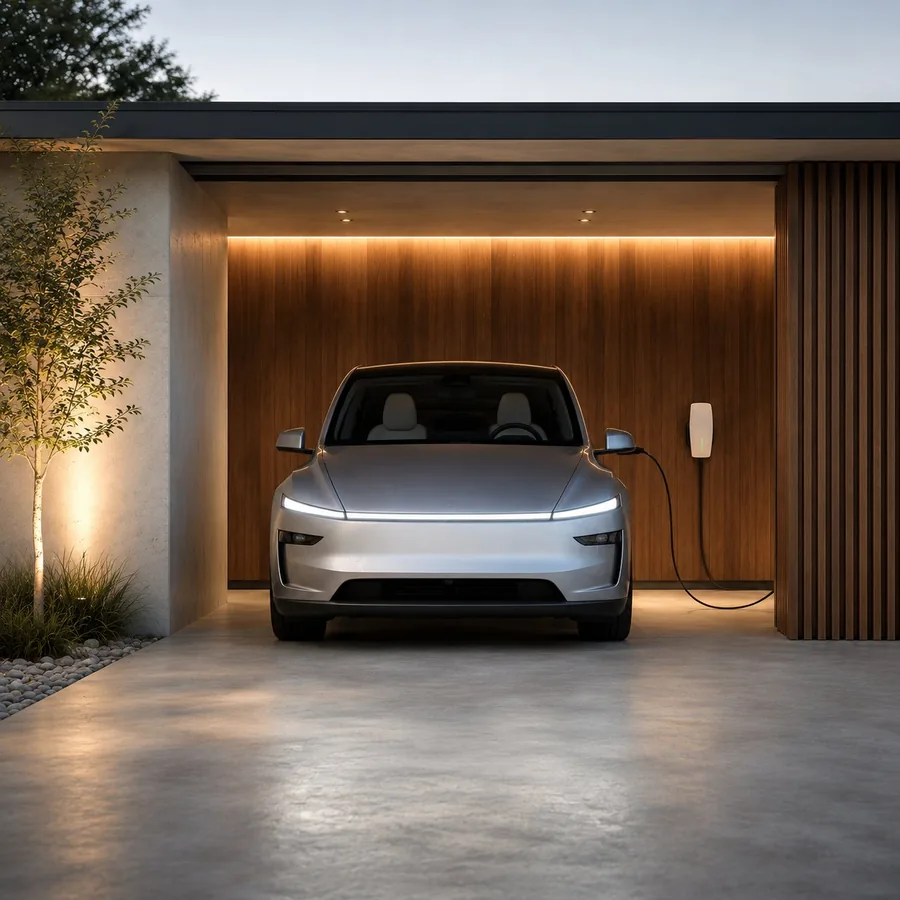
Types of home EV chargers available in Australia
Level 2 home charger (Type 2 socket)
The standard recommendation for Australian homeowners. A Level 2 charger runs off a dedicated 240V circuit delivering 7.4kW on single-phase power. Uses a Type 2 plug — the standard connector for virtually all EVs sold in Australia since 2020. Can be supplied by your installer or you can specify a brand (Zappi, Wallbox and others are popular for solar-integrated homes).
Tesla Wall Connector
Tesla's home charging unit, now sold with a CCS2 adapter making it compatible with all EVs. The Gen 3 Tesla Wall Connector is one of the most popular choices in Melbourne's western suburbs. The unit itself costs around $780 from Tesla. Electrical installation by a licensed electrician typically adds $600–$1,000.
Three-phase charger (11–22kW)
If your home has three-phase power, a three-phase charger delivers 11kW or 22kW — significantly reducing charge times. Most EVs support up to 11kW AC charging. Worth considering if you have three-phase power already available.
How much does EV charger installation cost in Melbourne?
| Installation type | Typical cost range | Notes |
|---|---|---|
| Standard Level 2 (short cable run) | $800 – $1,200 | Garage close to switchboard, modern board |
| Standard Level 2 (longer cable run) | $1,200 – $1,800 | Cable run 10m+ or through walls/roof space |
| Tesla Wall Connector (hardware extra) | $700 – $1,100 | Hardware supplied by customer from Tesla (~$780) |
| Three-phase charger installation | $1,200 – $2,500 | If three-phase power already available |
| Switchboard upgrade (if required) | $800 – $2,000 | Additional to above — not always required |
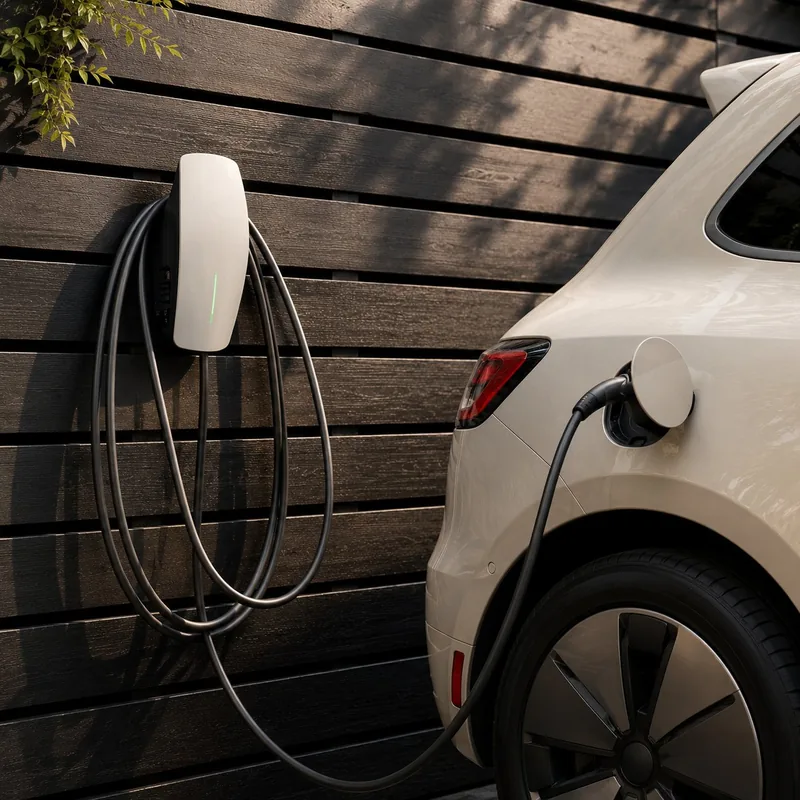
The installation process explained
- Site assessment — The electrician inspects your switchboard, identifies an available circuit, and confirms the optimal charger location.
- Circuit installation — A dedicated 32A or 40A circuit is run from the switchboard to the charger location.
- Charger mounting and wiring — The charging unit is fixed to the wall and connected. Weatherproof enclosures for outdoor installations.
- Testing and commissioning — The electrician load-tests the circuit and verifies the charger is operating correctly.
- Certificate of Electrical Safety — Issued on the day. This is your proof of compliant installation.
Switchboard upgrades — do you need one?
You probably don't need a switchboard upgrade if:
- Your home was built after 2000
- You already have a modern circuit breaker board (not ceramic fuses)
- Your home has existing safety switches (RCDs)
- You have spare circuit capacity in your switchboard
You may need a switchboard upgrade if:
- Your home was built before 1990 and has an older ceramic fuse board
- Your switchboard has no spare circuit capacity
- You're also adding solar, a pool pump, or air conditioning at the same time
In Melbourne's western suburbs, the majority of newer estate housing in Tarneit, Truganina, Wyndham Vale, Point Cook and Craigieburn does not require a switchboard upgrade for EV charger installation.
Which charger for your EV?
All modern EVs sold in Australia use either a Type 2 or CCS2 port for AC home charging — meaning a standard Level 2 home charger works with every EV on the market. Tesla, BYD, Hyundai, Kia, MG, Volvo, BMW, Polestar — all compatible.
For BYD, Hyundai and Kia owners interested in smart charging (adjusting charge rate to match solar generation), the Zappi charger by myenergi is the most popular choice among Melbourne west homeowners with solar systems.
How to choose an EV charger installer in Melbourne
Most electricians can wire a circuit. Very few specialise in EV charger installation — and the difference shows. An EV specialist knows the charging requirements of every model, understands switchboard load calculations for charging circuits, and can advise on charger selection for your specific car.
Here's what to look for:
- Do they specialise in EV chargers? Ask how many EV charger installs they've completed this month. A generalist electrician who does one every few weeks is not the same as a specialist team focused entirely on EV installation.
- Victorian A-Grade electrical licence — required by law. Verifiable on the VBA website.
- Upfront pricing — a reputable installer quotes the full cost before starting. No "we'll assess on the day" for anything that could have been discussed upfront.
- Certificate of Electrical Safety included — a legal requirement, not an optional extra.
- Local to your area — city-based electricians charge travel fees to reach western and northern suburbs. A locally-based specialist doesn't.
- Brand knowledge — ask if they've installed chargers for your specific EV model. A specialist will answer immediately. A generalist will hesitate.